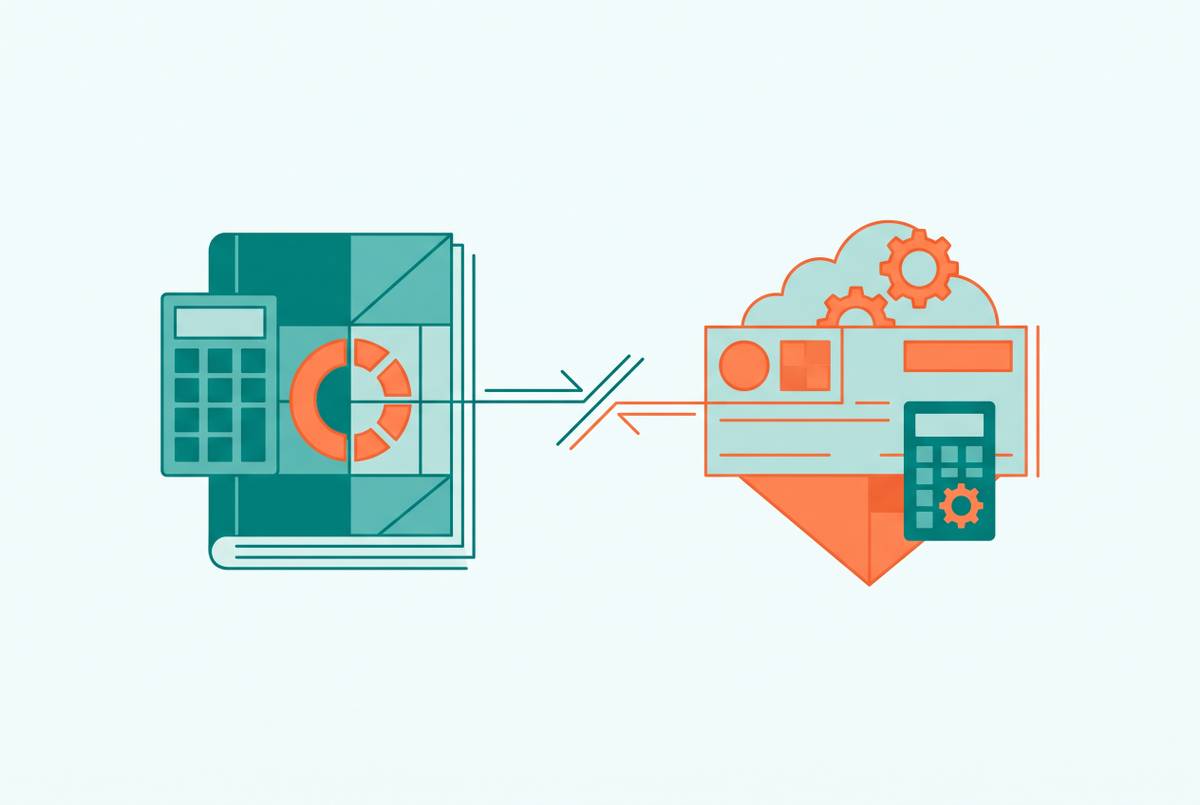
Gusto vs ADP for Small Business Payroll
Gusto prioritizes simplicity while ADP offers compliance depth and growth.
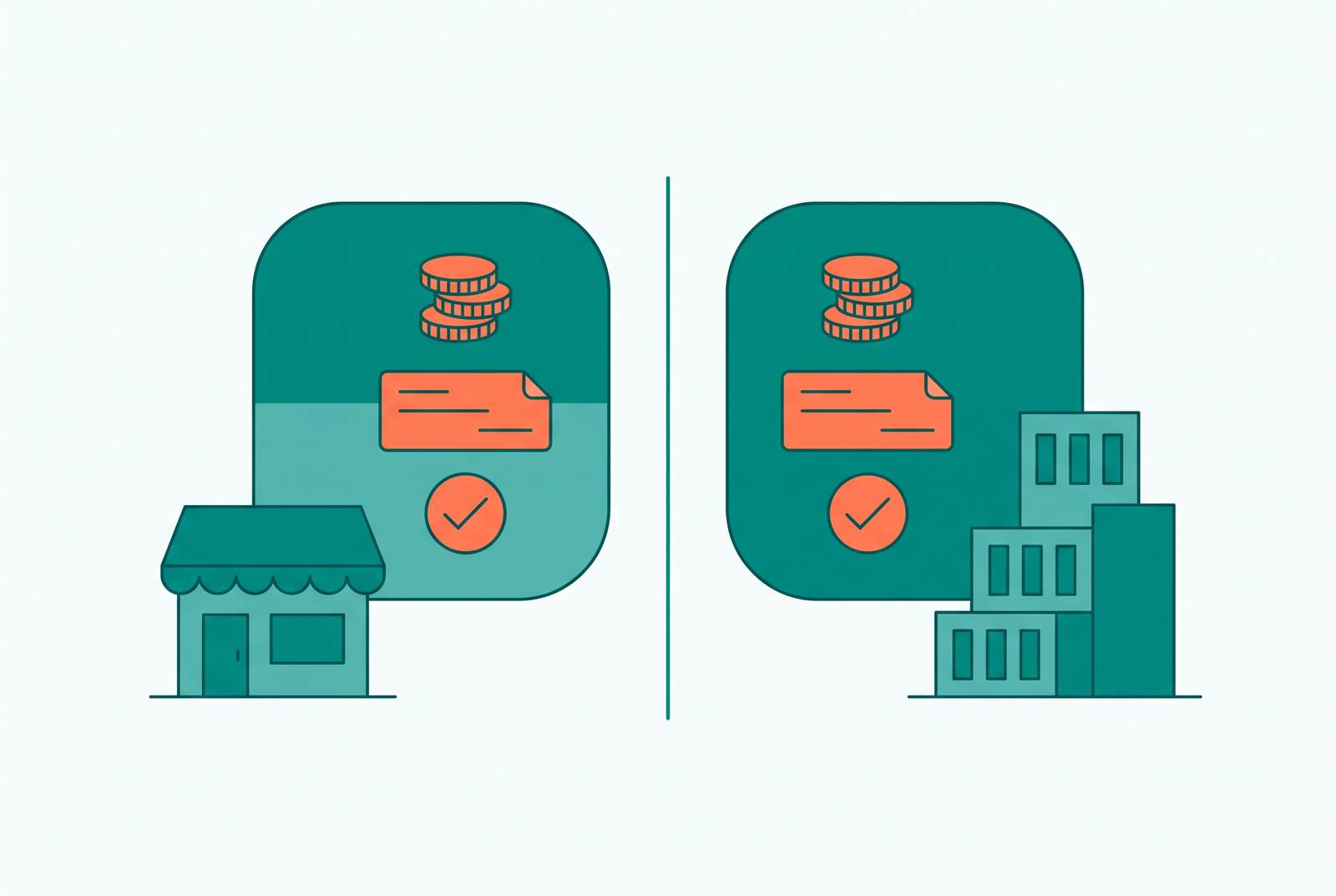
Gusto and ADP RUN both run payroll competently. That's not the debate. The real question is which philosophy fits a given business: Gusto's bet on radical simplicity for owners with zero HR background, or ADP's bet on compliance depth and a growth path that never requires switching platforms.
How pricing transparency (or its absence) shapes the decision before a feature is ever compared
Gusto publishes its prices right on the website, no sales call required. Three tiers: Simple runs $49 a month plus $6 per person, Plus is $80 a month plus $12 per employee, and Premium sits at $180 a month plus $22 per person (that top tier needs a custom quote, but the floor number is public). Worth flagging: as of March 1, 2026, the Simple plan's base jumped from $40 to $49, which matters if a business budgeted off an older number floating around online.
ADP RUN doesn't do public pricing. A sales rep quotes a custom rate, and estimates land somewhere between $79 and $150 a month plus a per-employee charge, though the real number depends on plan and add-ons. One third-party source found ADP quoting $115 per payroll run plus $2.11 per employee for an Enhanced plan covering 25 employees paid biweekly. ADP's own site advertises a starting rate as low as $39 a month plus $5 per employee for basic payroll, but the gap between that floor and what a business actually pays after add-ons is the whole budgeting risk in a nutshell.
Here's a detail that trips people up: RUN Powered by ADP charges a base fee, a per-employee fee, and a per-payroll-run fee. Run payroll more often, pay more. A company switching from biweekly to weekly pay frequency could roughly double its payroll processing cost on that structure. (The run-based billing applies specifically to RUN Powered by ADP, not necessarily every ADP product.)
None of this is a knock on ADP's math. It's a signal about what kind of product each company built. ADP's pricing model assumes a sales conversation and some configuration; Gusto's assumes a business owner who wants to see the number and sign up before lunch. One more line item: Gusto charges no setup fee. ADP does. For a two-person startup watching every dollar in the first quarter, that's not nothing.
What Gusto's add-on costs actually look like at 10, 25, and 50 employees
Numbers make this concrete faster than adjectives do. A 10-person team on Gusto's Simple plan pays $109 a month. Bump to Plus, and that same team pays $200 a month. Stretch to 50 employees on Plus, and the bill hits $680 a month before anyone's touched an optional add-on like priority support or broker integration.
Those add-ons matter more than they sound like they should. Modules stacked on top of the base plan, think benefits administration extras or advanced reporting, can tack on $10 to $30 per employee per month depending on tier. A $49 headline plan can quietly become a $100-plus monthly line item once a business turns on the features it actually needs, not just the ones it started with.
Take next-day direct deposit as a case study in how tier selection shapes daily operations, not just cost. On Simple, it's $15 a month plus $3 per person. On Plus and Premium, it's included. Multi-state payroll follows the same pattern, except worse: it isn't available on Simple at all. A business with one remote employee working from a different state gets pushed straight to the $80-a-month Plus tier, whether or not anything else about the business needs Plus-level features.
For businesses built on contractors rather than employees, Gusto's contractor-only plan runs $35 a month plus $6 per contractor. A solo owner with no other employees can run Gusto Solo for $55 a month. The takeaway across all these numbers: Gusto's advertised price is honest, but a business should model the tier it will actually need, multi-state, time tracking, next-day pay, rather than anchor on the $49 floor and get surprised later.
Core payroll features where both platforms deliver, and where they genuinely diverge
Both platforms handle the fundamentals without drama: automated payroll calculations, federal and state and local tax filing, direct deposit, W-2 and 1099 generation, employee onboarding, and benefits administration. One asterisk worth checking before signing: whether additional filing fees apply on the specific ADP plan a business selects, since costs can vary by tier.
Beyond the baseline, the two platforms start pulling in different directions. Gusto includes unlimited payroll runs at every tier; ADP RUN charges per run, so a business that pays weekly rather than monthly feels that difference directly in the bill. Gusto also runs payroll on autopilot, meaning it fires automatically without someone manually clicking "run" every cycle, and the whole setup process is built for an owner with no payroll background, with implementation typically measured in days. Gusto connects users to more than 9,000 health insurance plans, covers 401(k), HSA, FSA, and commuter benefits, includes PTO tracking at every tier, and handles contractor payments in over 120 countries.
ADP RUN counters with strengths that show up as complexity increases. Multi-state and multi-jurisdiction payroll is a noted strength of ADP RUN, covering all 50 states, in contrast to Gusto's approach of gating multi-state capability behind higher tiers. Background checks are included starting at ADP's Enhanced plan, where Gusto leans on third-party integrations to cover the same ground. ADP Assist, its AI-powered error detection, flags payroll anomalies before a run goes out, which matters more as headcount and complexity climb. ADP also processes payroll through web, phone, or mobile app, useful for an owner who needs to run payroll from a job site with spotty WiFi and a decent phone signal.
Strip away the feature lists and one distinction does most of the work: Gusto is designed for the owner to run it. ADP RUN is designed for a business that has, or plans to hire, a dedicated payroll administrator.
HR tools, compliance depth, and when "basic" stops being enough
Gusto's HR tools stay deliberately light: onboarding, a self-service employee portal, document storage, an org chart on Plus and above, and performance management as an add-on or Plus feature. Fine for a founder-led team handling HR between other jobs. Not built for anything heavier.
ADP's HR depth scales with the plan tier in a way Gusto's doesn't attempt to match. Essential covers payroll, taxes, and compliance basics. Enhanced adds a ZipRecruiter integration, State Unemployment Insurance handling, and garnishment payment service. Complete adds live HR support. HR Pro, the top tier, adds access to an HR advisor, a handbook builder, a learning management system with compliance training courses, and legal compliance resources, none of which Gusto offers natively at any price point.
This is where the philosophies really split. ADP provides multi-jurisdiction tax filing, proactive compliance updates, and HR advisory access, and for industries carrying real regulatory exposure (construction, healthcare, franchise operations), that infrastructure functions as risk reduction, not a nice-to-have. Gusto does handle multi-state payroll from Plus upward, but third-party reviewers describe it struggling with niche industry compliance, union payroll, and complex deduction structures, areas where ADP's coverage runs broader. ADP's reporting goes deeper too: custom report builders, workforce analytics, compliance dashboards. Gusto's reporting covers payroll history, tax filings, and standard HR reports, which is plenty for most teams under 50 people but starts feeling thin above that.
One more piece worth naming: ADP TotalSource, its PEO offering, puts a small business into a co-employment arrangement that unlocks Fortune 500-level benefits and shares employer liability. Gusto does not offer a comparable PEO arrangement. A business that has crossed into multi-state operations, sits in a regulated industry, or has grown to the point where an HR misstep carries real legal weight has probably outgrown what Gusto's HR layer was built to handle.
Customer support: what each platform actually delivers when something goes wrong
Gusto's support runs on chat, callbacks, and email, live chat from 5 a.m. to 5 p.m. Pacific on weekdays, with callbacks also available during support hours. Benefits advisors and HR experts show up on the higher tiers. It's a support model built around users who rarely need to pick up the phone in the first place.
ADP runs 24/7 phone support, with dedicated HR experts available on the HR Pro plan. That round-the-clock window exists because complex or urgent payroll problems don't wait politely for business hours. The trade-off: dedicated reps tend to go to larger accounts first, so smaller RUN clients more often land in a general support queue, a gap several third-party reviewers have pointed out even while crediting ADP for 24/7 access.
The review numbers lean toward Gusto on the satisfaction side. As of April 2026, Gusto holds a 4.6 out of 5 average across 8,504 reviews on G2, with 84% of reviewers giving five stars, and Capterra shows 4,193 reviews on the platform. Gusto's own survey of 538 customers in September 2024 found 9 out of 10 would recommend the platform, with customers reporting an average of 100 hours saved per year on tax and compliance work after switching from ADP. G2 also named Gusto its top payroll platform for customer satisfaction in fall 2025, a title that reflects the small-business segment where Gusto competes most directly, not the enterprise market where ADP plays a different game entirely.
Translate that into practical terms: a solo founder or a 10-person shop is well served by Gusto's weekday support window. A 40-person business running multi-state payroll with real compliance stakes benefits more from ADP's 24/7 line and HR Pro's dedicated advisor access, hours that Gusto simply doesn't offer at any price.
Integrations and the tech stack each platform fits into
Gusto plugs natively into QuickBooks, Xero, Google Workspace, Slack, and a handful of time-tracking tools, essentially the exact software stack a small business is already running before payroll ever enters the picture. For a company on QuickBooks or Xero, that native sync reduces the manual reconciliation that payroll against the books usually demands.
ADP connects to more than 900 integrations, but the library leans enterprise: ERP systems, larger HR suites, workforce management tools that a 12-person company has no reason to own yet. That breadth becomes relevant once a business starts layering on benefits systems, applicant tracking, and HR software beyond what RUN itself covers.
Neither platform, worth noting, integrates natively with Salesforce for payroll-to-CRM data flows, a gap for teams wanting connected revenue and workforce data in one dashboard, though it's unlikely to matter for most companies under 50 employees. For a 15-person business still living inside QuickBooks, Gusto's integration depth covers what's actually needed. ADP's advantage shows up for businesses that have already outgrown small-business software entirely and are running enterprise systems alongside RUN.
Scalability: what happens when your business grows past the platform's sweet spot
Gusto is built for teams under roughly 150 employees, and there's no native path past that ceiling. Grow beyond it, and the business has to migrate, payroll history, integrations, everything, to a different platform. That's not a hypothetical inconvenience: migrating payroll and benefits records is expensive and slow, and it's the kind of project that eats a finance team's quarter.
ADP built its whole ecosystem to avoid exactly that migration headache. RUN handles businesses from 1 to roughly 49 employees, Workforce Now picks up the mid-market tier, and Lyric HCM covers enterprise scale, with the core payroll and compliance engine carrying over at each stage rather than resetting. ADP TotalSource, the PEO option, offers a co-employment path for businesses that need it. So the pitch isn't just "we handle bigger companies." It's "you never have to leave."
Cost pressure alone can force the question earlier than expected: that 50-employee business paying $680 a month on Gusto's Plus tier, before any add-ons, may start shopping around well before it hits a genuine feature gap. ADP's scalability case lands hardest for businesses in growth-stage industries, construction, healthcare, franchising, or any company planning to add headcount fast, where the compliance depth that looks like overkill at 10 employees turns into a real asset at 75. The honest framing here: a business confident it'll stay under 50 people for the next few years can optimize for Gusto's simplicity today. A business planning rapid growth should weight the scalability question heavily now, before the migration bill comes due later.
Which businesses belong on Gusto, which belong on ADP RUN, and the signals that make it clear
Gusto fits founder-led teams under roughly 50 employees, single-state or close to it, who want an owner (not a payroll specialist) running payroll in an afternoon and who value a published price over a sales call. That's the classic Gusto customer: a design studio with 12 people in one state, a restaurant group with 30 employees and no plans to expand across state lines, a startup whose CEO still approves expense reports personally.
ADP RUN fits businesses that have already found, or expect to soon find, compliance complexity: multi-state operations, regulated industries, union payroll, or headcount growth that's going to blow past 50 within a couple of years. It also fits businesses that want the option of a dedicated payroll administrator down the line without switching vendors to get there.
Neither platform is the wrong answer in the abstract. ADP's scale (its FY2025 revenue crossed $20 billion, and it pays roughly 42 million workers globally) explains why compliance infrastructure comes standard rather than bolted on. Gusto's 500,000 businesses show a different kind of proof: that simplicity, done well, has its own market and its own gravity. The decision isn't about which company is better. It's about matching a business's current size and regulatory exposure, and its growth trajectory over the next two or three years, to the philosophy each platform was actually built around.